What Does ABA Therapy Look Like for a 2-Year-Old?
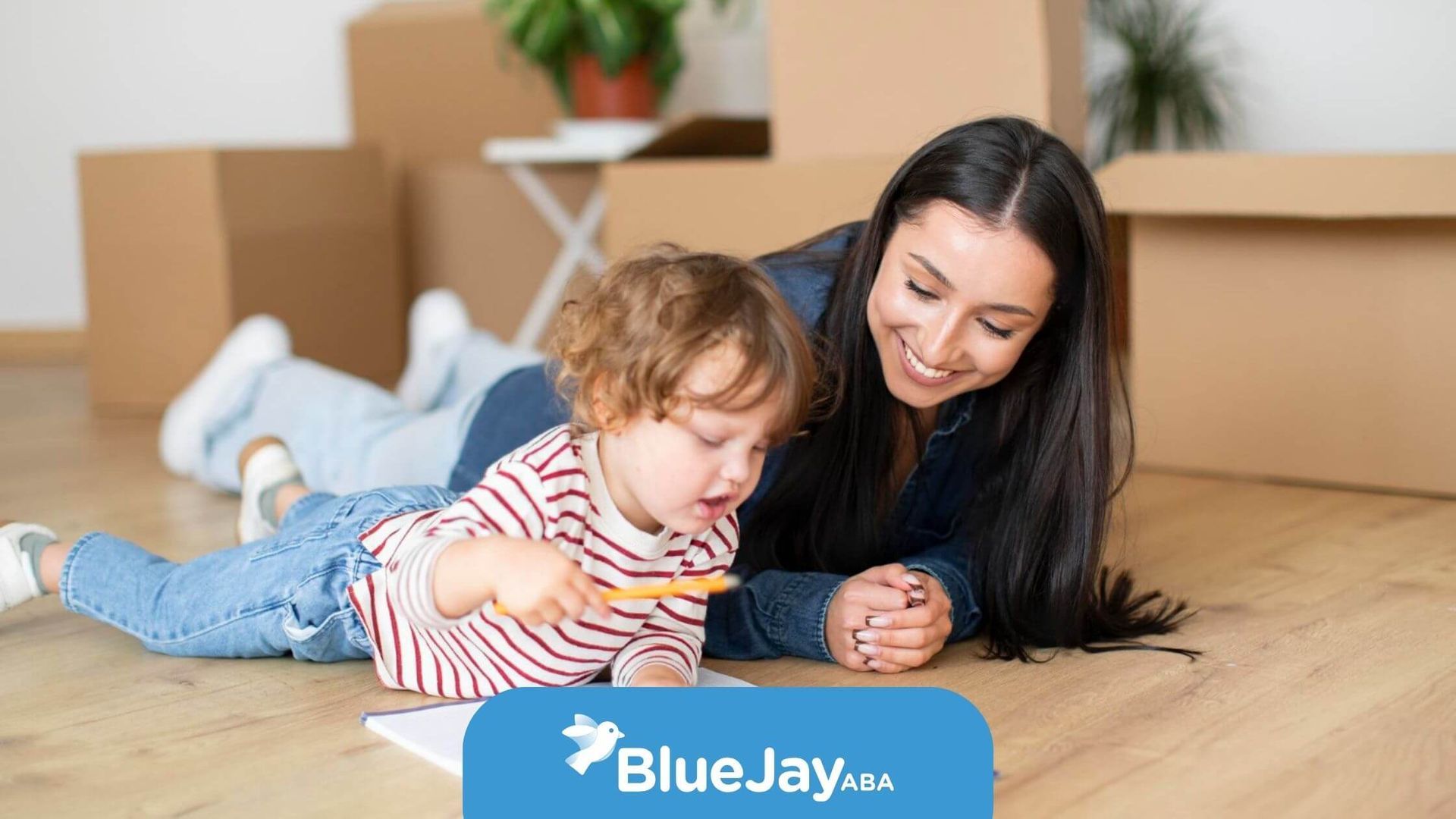
ABA therapy for a 2-year-old is gentle, play-based, and highly personalized. At this age, sessions focus on building foundational skills like eye contact, following simple instructions, and early communication. Therapists use toys, songs, and routines to keep learning fun and engaging while reinforcing positive behaviors.
Research in early intervention consistently shows that starting ABA therapy around age 2 can lead to meaningful improvements in communication, social engagement, and adaptive skills, especially when therapy is intensive and individualized.
If your toddler was recently diagnosed with autism, this guide will walk you through exactly what ABA therapy looks like at age 2, how NC Medicaid covers it, and how to get started with Blue Jay ABA's Early Start Program — often within a few weeks of your first call.
Each child’s program is tailored to their developmental needs. For example, a therapist might help a child learn to request items using gestures or words, respond to their name, or reduce tantrums through structured routines. Sessions are typically short 30 to 60 minutes, and may take place at home, in a clinic, or even in daycare settings.
You Just Got the Diagnosis. What Now?
If you're reading this in the days or weeks after your toddler's autism diagnosis, take a breath. A diagnosis isn't a verdict — it's a doorway to services your child couldn't access yesterday. The most important things to know right now:
- 2 is one of the best ages to start ABA. Your child's brain is in its most adaptable phase of development. Every month you start earlier compounds.
- You don't have to figure this out alone. Blue Jay's intake team handles the Medicaid paperwork, insurance verification, and scheduling so you can focus on your child.
- Therapy will not look how you might imagine. No clipboards. No clinical drills. Your toddler will be playing — and learning at the same time.
A Real Session, Minute by Minute
Here's what a typical 2-hour in-home ABA session with a Blue Jay Registered Behavior Technician (RBT) actually looks like for a 2-year-old:
| Time | What's Happening | What Your Child Is Learning |
|---|---|---|
| 0–10 min | Greeting + offer of a favorite toy or activity | Pairing the therapist with positive experiences ("this person is fun") |
| 10–25 min | Floor play with bubbles, blocks, or a cause-and-effect toy | Joint attention, requesting ("more," "pop"), waiting briefly for a turn |
| 25–35 min | Snack and a song with built-in pauses | Functional communication — choosing between two snacks, finishing a song with a sound |
| 35–55 min | Motor imitation — Simon Says-style with a stuffed animal | Copying clapping, stomping, waving — foundations for language imitation |
| 55–70 min | Movement break + sensory play (water table, playdough) | Self-regulation and following simple one-step directions |
| 70–90 min | Book time or pretend play with a parent in the room | Pointing to pictures, turning pages, parent coaching opportunity |
| 90–105 min | Free play with naturalistic teaching woven in | Generalizing skills practiced earlier in the session |
| 105–120 min | Goodbye routine + brief recap with parent | Transitions, predictability, and your check-in with the RBT |
Each child’s program is tailored to their developmental needs. For example, a therapist might help a child learn to request items using gestures or words, respond to their name, or reduce tantrums through structured routines. Sessions are typically short 30 to 60 minutes, and may take place at home, in a clinic, or even in daycare settings.
You Just Got the Diagnosis. What Now?
If you're reading this in the days or weeks after your toddler's autism diagnosis, take a breath. A diagnosis isn't a verdict — it's a doorway to services your child couldn't access yesterday. The most important things to know right now:
- 2 is one of the best ages to start ABA. Your child's brain is in its most adaptable phase of development. Every month you start earlier compounds.
- You don't have to figure this out alone. Blue Jay's intake team handles the Medicaid paperwork, insurance verification, and scheduling so you can focus on your child.
- Therapy will not look how you might imagine. No clipboards. No clinical drills. Your toddler will be playing — and learning at the same time.
A Real Session, Minute by Minute
Here's what a typical 2-hour in-home ABA session with a Blue Jay Registered Behavior Technician (RBT) actually looks like for a 2-year-old:
What a Typical ABA Session Looks Like for a 2-Year-Old
A typical session is structured but feels like play to the child. Therapists follow your child’s interests while embedding learning opportunities throughout the session.
A session may include:
- Play-based learning with toys, bubbles, or favorite activities
- Practicing simple communication skills like pointing, signing, or first words
- Turn-taking and joint attention activities
- Short, structured tasks mixed with free play
- Positive reinforcement (praise, toys, or snacks) to encourage progress
Sessions are designed to be flexible, engaging, and developmentally appropriate so your child stays motivated and comfortable.
Parents play a key role. ABA therapists often coach caregivers on how to use strategies during daily routines, turning everyday moments into learning opportunities.
Blue Jay ABA Early Start Program
At Blue Jay ABA, we offer a specialized Early Start Program designed specifically for toddlers. This program focuses on building core developmental skills during the most critical learning window.
Our early start approach includes:
- One-on-one, in-home ABA therapy
- Play-based, natural environment teaching
- Parent coaching and support
- Individualized treatment plans tailored to your child’s needs
We focus on helping toddlers build communication, reduce frustration, and develop skills that set the foundation for lifelong learning.
Does NC Medicaid Cover ABA for Toddlers?
Yes — many young children in North Carolina can access ABA therapy through Medicaid. NC Medicaid typically covers ABA services for children with an autism diagnosis, including early intervention for toddlers.
Our team at Blue Jay ABA helps families:
- Verify Medicaid eligibility
- Navigate the approval process
- Start services as quickly as possible
If your child has recently been diagnosed, checking your coverage is one of the most important first steps.
Get Started with ABA Therapy Today
If your toddler was recently diagnosed, starting early can make a powerful difference. The team at Blue Jay ABA is here to guide you every step of the way—from insurance verification to your child’s first session.
Schedule a free consultation today to:
- Verify your insurance or Medicaid coverage
- Learn about our Early Start Program
- Begin services as soon as possible
Contact us today and give your child the strongest possible start.
Schedule a free consultation. Contact us today!
SOURCES:
https://www.webmd.com/mental-health/what-is-applied-behavior-analysis
https://www.reddit.com/r/Autism_Parenting/comments/1gs9b3w/3_months_of_aba_for_a_2_12_year_old_our_experience/
https://pmc.ncbi.nlm.nih.gov/articles/PMC9458805/
https://my.clevelandclinic.org/health/treatments/25197-applied-behavior-analysis
https://online.regiscollege.edu/blog/aba-therapy-examples
Related Posts